
AI-driven Reveal Lens makes its first overseas appearance at Singapore Badminton Challenge
At the Antica Singapore International Challenge 2026, Malaysia's Reveal Lens AI review system was used for the first time abroad, offering a cheaper, faster way to settle line disputes in badminton.

When the Antica Singapore International Challenge opened its courts this August, organisers introduced a new way to settle disputed line calls. The system, developed by Malaysian sports‑tech firm Revealtek, promises faster decisions at a fraction of the cost of traditional equipment.
What the system does
Reveal Lens is an Instant Review System approved by the Badminton World Federation (BWF). It combines twelve synchronized high‑speed cameras that capture footage at 240 frames per second with computer‑vision algorithms. When a player or official challenges a call, the software analyses the relevant frames and returns a verdict within seconds. The result appears on the scoreboard, eliminating long pauses that can disrupt the flow of play.
How it differs from traditional setups
Conventional international review rigs often rely on fixed infrastructure, multiple specialised cameras and a dedicated engineering crew. Those installations can cost around US$100,000 per event and may take a full day to set up. Reveal Lens, by contrast, can be installed and calibrated in roughly two hours and is marketed as a lower‑cost alternative. The reduced deployment time and equipment price make it attractive to smaller tournaments that previously could not afford a full review system.
Implications for tournament organisers
For the Singapore event, the system was deployed across the main courts and handled every line‑call challenge during the five‑day competition. Officials reported that the average review time fell to under ten seconds, compared with the typical thirty‑second‑plus intervals seen with legacy solutions. Faster resolutions keep spectators engaged and reduce the risk of schedule overruns, a practical benefit for any event manager juggling venue fees, broadcast windows and player commitments.

Photo by Caleb Oquendo on Pexels
Roadmap and future demonstrations
Revealtek is not standing still. The company is adding an analytics module that will record call‑frequency data, player movement patterns and error trends, giving coaches and federations deeper insights into performance. A fully autonomous line‑calling prototype, capable of issuing decisions without human input, is slated for a live demonstration in Australia in October 2026. While the prototype has not yet been judged in a competitive setting, the planned demo will provide a clearer picture of its reliability.
Interest from neighbouring markets
Organisers and national badminton associations in Vietnam and Indonesia have expressed interest in trialling the system. Those conversations are at an early stage, and no contracts have been signed yet. Nonetheless, the expressed curiosity suggests a regional appetite for affordable, AI‑enabled officiating tools, especially as the sport seeks to modernise its governance.
Bottom line for decision‑makers
- Cost advantage, With a hardware footprint that can be installed in two hours and a price point well below the US$100,000 benchmark, Reveal Lens lowers the financial barrier for smaller events.
- Speed of review, Seconds‑long verdicts keep matches flowing, preserving broadcast schedules and audience engagement.
- Future functionality, Upcoming analytics and autonomous line‑calling features could further differentiate the product, but their performance remains to be validated in live competition.
- Regional traction, Early interest from Vietnam and Indonesia hints at a growing market, though adoption timelines are still uncertain.
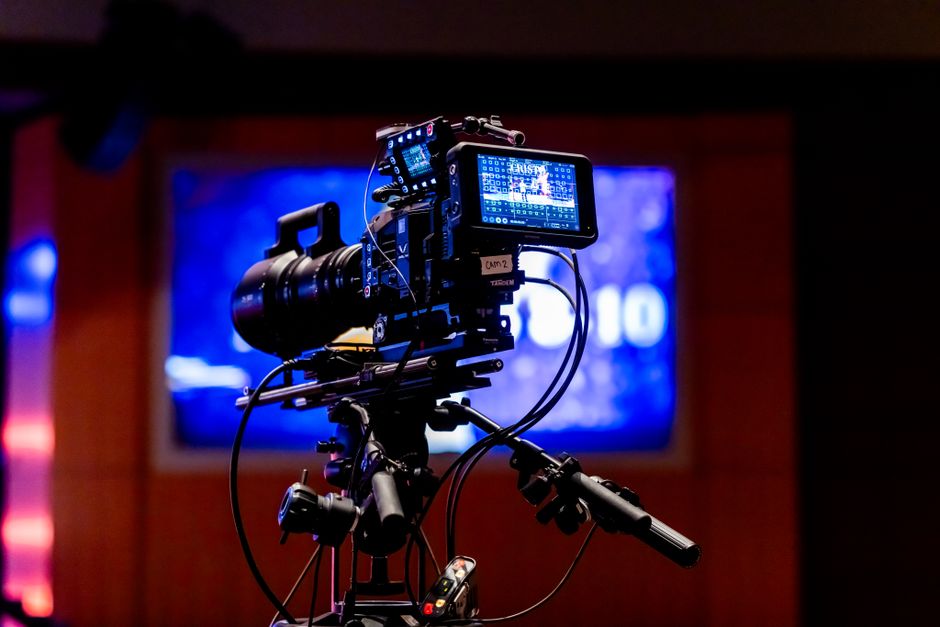
Photo by Caleb Oquendo on Pexels
For tournament directors weighing technology upgrades, the Singapore deployment offers a concrete case study: a proven BWF‑approved system that delivers rapid reviews without the heavy capital outlay of legacy rigs. The next step is to monitor the Australian demonstration and any follow‑up pilots in Southeast Asia before committing to larger‑scale rollouts.
Terms used in this article
- BWF, Badminton World Federation, the sport’s global governing body.
- Instant Review System, Technology that lets officials challenge a line call and receive an immediate decision based on video analysis.
- High‑speed camera, A camera capable of recording many frames per second, here 240 fps, to capture fast‑moving shuttlecocks accurately.
- Computer‑vision algorithm, Software that interprets visual data, identifying the exact point where the shuttle crossed the line.
- Analytics module, An add‑on that processes review data to produce statistics for coaches, players or organisers.
- Autonomous line‑calling, A system that can make a call without a human operator reviewing the footage.
Instant-review systems like this are a real-world example of the kind of machine vision applications increasingly used in live sports and event technology.