
Must‑have backup features for SMB IT teams
Small IT teams need a backup platform that gives them control, visibility and automation. Seven features, from full API access to AI‑driven fix suggestions, make the difference between a fragile process and a reliable safety net.
Small businesses rely on data backups to keep operations running when hardware fails or ransomware strikes. For IT teams that are often lean, the backup platform must do more than store copies, it must give them the tools to stay in control without adding workload.
Automation via a full API and CLI
A complete application programming interface (API) and command‑line interface (CLI) let the team script job creation, change policies and pull reports. Instead of clicking through menus for every new server, a short script can add the workload, set retention and generate a capacity report in seconds. When you speak to a vendor, ask:
- Is the API fully documented and supported for all backup functions?
- Does the CLI expose the same capabilities as the graphical console?
- Are there sample scripts for common tasks such as creating a new backup job?
Having these hooks means you can integrate backup actions into existing automation pipelines and free up valuable admin time.
Four‑eyes control for destructive actions
Accidental deletion of a backup set can cripple recovery. A built‑in second‑approval workflow, often called four‑eyes control, forces a second person to confirm any destructive operation, such as deleting a job or purging old copies. This extra check reduces the risk of human error and provides an audit trail. Key questions for vendors include:
- Can you enable mandatory approval for delete or purge actions?
- Does the system log who approved and when?
- Is the approval process configurable per role or per job?
SIEM and monitoring integration
Backup alerts are only useful if they appear in the monitoring stack you already use. Native integration with security information and event management (SIEM) tools means a failed job or storage‑capacity warning shows up alongside network and server alerts. This centralises incident response and avoids a siloed backup console. When evaluating a solution, confirm:
- Which SIEM platforms are supported out of the box?
- Can you map backup events to custom severity levels?
- Is there a documented API for pushing custom metrics?

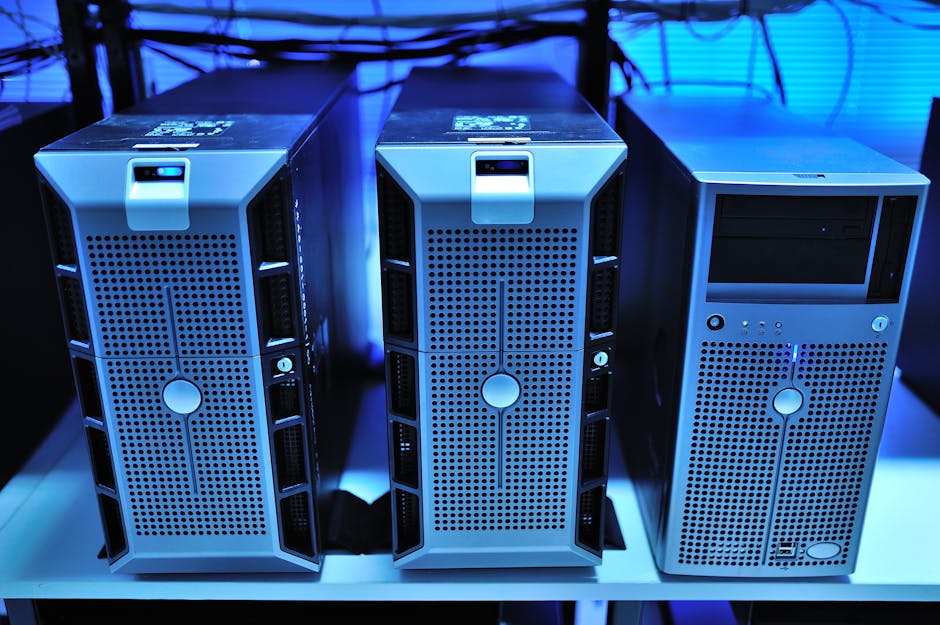
Photo by panumas nikhomkhai on Pexels
Configurable storage‑efficiency controls
Compression and deduplication reduce the amount of disk space needed for backups, but the optimal settings differ between environments. Some workloads benefit from aggressive compression, while others need fast restore times and prefer lighter settings. A platform that lets you tune these controls per job lets you balance cost and performance. Ask the vendor:
- Are compression and deduplication settings adjustable per backup job?
- How does the platform report the storage savings achieved?
- Can you set different policies for primary and archive tiers?
Automatic tiered storage offload
Keeping every backup on high‑performance storage is expensive. Automatic tiered offload moves older copies to lower‑cost object storage once they cross a policy‑defined age or size threshold. This keeps recent restores fast while pushing historic data to cheap cloud storage. Verify the following before you commit:
- What object‑storage providers are supported for the offload tier?
- How are offload policies defined, by age, size or a combination?
- Is there a way to retrieve an offloaded backup without manual intervention?
Environment‑aware AI assistant
Modern platforms embed an AI assistant that reads job history, alarms and capacity data to answer context‑specific questions. Instead of digging through logs, you can ask the assistant, “Why did backup X fail yesterday?” and receive a concise explanation with next steps. To gauge its usefulness, probe:
- Does the AI understand the terminology of my environment (e.g., VMware, Hyper‑V, Azure)?
- Can it suggest actions based on recent alarms?
- Is the assistant available through the web console and the CLI?
Automated fix suggestions
When a backup job fails, the system can propose remediation steps, for example, “Increase the network timeout” or “Check that the VSS writer is running”. This speeds up troubleshooting and reduces mean‑time‑to‑resolution. Ask the vendor:
- Are fix suggestions generated automatically or curated by engineers?
- Do they link to relevant knowledge‑base articles?
- Can the suggestions be customised for our specific workloads?

Photo by Christina Morillo on Pexels
Putting it all together
For an SMB IT team, the ideal backup platform checks every box above. Start by creating a shortlist of vendors and use the question list as a scoring rubric. Prioritise solutions that:
- Offer a fully documented API and CLI.
- Enforce four‑eyes approval for any destructive change.
- Integrate natively with your existing SIEM or monitoring tool.
- Provide per‑job storage‑efficiency settings.
- Automate tiered offload to affordable object storage.
- Include an AI assistant that can answer environment‑specific queries.
- Deliver automated, actionable fix suggestions.
By demanding these features, you turn backup from a hidden, manual process into a transparent, automated service that supports business continuity without stretching your limited resources.
Terms used in this article
- API (Application programming interface), a set of commands that lets software talk to another system.
- CLI (Command‑line interface), a text‑based way to control software, often used in scripts.
- SIEM (Security information and event management), a tool that collects and correlates security‑related logs.
- Deduplication, a technique that stores only one copy of duplicate data blocks.
- Object storage, a cloud‑based storage model that saves data as discrete objects rather than files in a hierarchy.
- AI (Artificial intelligence), software that can analyse data and generate human‑like responses.
Stratum is a Veeam partner and brings independent expertise to help SMBs evaluate backup solutions.
