Accountability in the Age of AI Coding
Explore how AI-powered coding reshapes software development and why human accountability, transparent culture and clear role ownership remain essential.
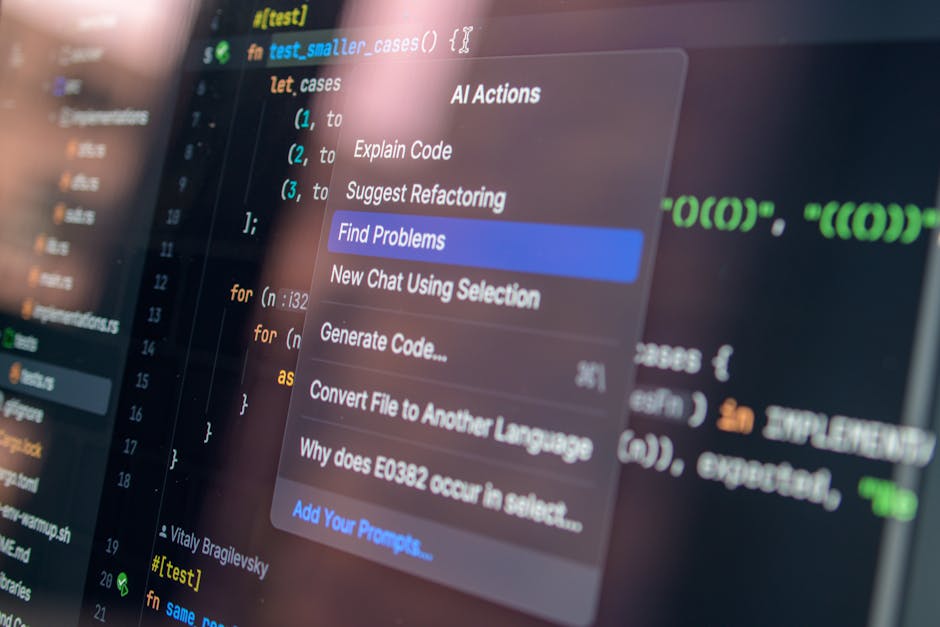
AI is reshaping how software teams write and ship code, but the shift does not erase the need for human responsibility. Whether you run a small startup or a multinational bank, the people who press merge still own the outcomes of the code that reaches production. Hugo Venturini, speaking on the InfoQ Engineering Culture podcast, stresses that the power of AI must be balanced with clear accountability at every level of the organisation.
Why accountability matters when AI writes code
AI is a powerful tool, but humans remain accountable for the decisions it enables and the code it produces. The technology can generate functions, suggest refactorings, or even draft entire modules, yet the ultimate quality, security and maintainability of that code depend on the developer who reviews and approves it. Without a strong sense of ownership, a team may let AI‑generated snippets slip through unchecked, inviting bugs or compliance gaps.
Pull‑request size is not a new problem
The growth of pull‑request size predates AI; the challenge of reviewing large changes existed long before code‑generation assistants arrived. Teams should continue using trust‑based judgement about what needs a thorough review and what can be merged with minimal oversight. Large pull‑requests still dilute focus, increase the chance of missed defects, and make it harder for reviewers to verify AI‑suggested modifications. The lesson is clear: AI does not solve the classic problem of overly‑broad changes, it merely adds another layer that must be inspected.
What we can learn from Microsoft’s 2014 role merger
In 2014 Microsoft merged the software‑engineer and tester roles, making engineers accountable for the whole product rather than handing off a separate testing phase. The move raised product quality because engineers could not hide behind a dedicated testing team; they owned the end‑to‑end outcome. The experience shows that redefining responsibility, even without AI, improves quality, and the same principle applies when AI becomes part of the workflow. When developers own the full lifecycle, they are more likely to scrutinise AI‑generated output.

Photo by Jakub Zerdzicki on Pexels
How AI blurs traditional role boundaries
AI collapses traditional role boundaries, product manager, architect and tester, pushing engineers to ask better questions. The skill of probing the intent behind a suggestion, evaluating its impact on architecture, and foreseeing testing implications defines seniority. Because AI can answer low‑level queries instantly, senior engineers must focus on higher‑order questions: Does this change align with the product vision? Will it introduce a regression under load? Deliberate training on question‑asking therefore becomes a critical part of upskilling.
Building a transparent, no‑blame culture
Cultures of transparency, honest no‑blame Q&A sessions, anonymous queries, and naming solutions rather than people, enable individuals to dare to take accountability at any organisational level. When a mistake is reported without fear of reprimand, the focus shifts to fixing the problem and learning from it. Such an environment encourages developers to surface AI‑induced errors early, rather than hiding them to protect a perceived image of competence.
Practical steps for teams
- Keep pull‑requests small, set a threshold (for example 400 lines) and split larger work into logical units before involving AI.
- Treat AI suggestions as drafts, not final code, require a peer review that confirms intent, performance and security.
- Adopt role‑ownership principles, give engineers explicit responsibility for the complete life‑cycle of their contributions, mirroring the Microsoft experiment.
- Teach question‑driven development, run workshops where senior staff model how to interrogate AI output and map it to architectural goals.
- Foster a no‑blame reporting channel, allow team members to raise concerns about AI‑generated code anonymously, then discuss solutions collectively.

Photo by Daniil Komov on Pexels
Conclusion
AI will continue to amplify the speed of software creation, but it does not replace the need for human accountability. By remembering that pull‑request size predates AI, learning from past role‑ownership experiments, sharpening the habit of asking deeper questions, and nurturing a transparent culture, organisations can harness AI without sacrificing quality or responsibility. The result is a development process that benefits from AI’s efficiency while retaining the human judgement that ultimately safeguards the business.
Terms used in this article
- AI (artificial intelligence): software that can perform tasks that normally require human intelligence, such as generating code.
- Pull‑request: a request to merge a set of changes from one branch of code into another, typically reviewed by peers.
- Product manager: the person responsible for defining the product vision and prioritising features.
- Architect: a senior engineer who designs the overall structure of a software system.
- Tester: a specialist who validates that software works as intended and meets quality standards.
- No‑blame culture: an environment where mistakes are discussed openly without assigning personal fault, focusing instead on learning and improvement.